
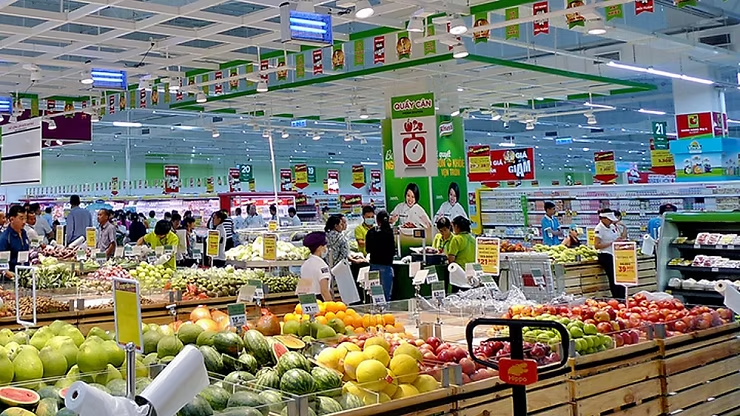
Vietnam’s consumer market is constantly evolving, driven by changing consumer lifestyles, income, and the rapid growth of the middle class. The country’s economy has also developed strongly in recent years, which can be seen in its rapid growth of total consumer expenditure from US80billiontoUS170 billion between 2010 and 2018.
The Power that Vietnamese consumers have more money to spend. In fact, within the first nine months of 2018, the country experienced an 11.3 percent of increased spending. This growth in consumer spending has created widespread openings for businesses to provide new services and products that are available for consumers.
Evolution Of The Consumer Market In Vietnam
The Steady Flow Of Foreign Investment Into Vietnam Has, And Will Continue To, Propel Economic Growth, And Create Jobs, Resulting In Increased Local Spending Power, With An Increase In The Expenditure For Both Urban And Rural Consumers.
Vietnam’s consumer base is a young demographic between the ages of 25 and 54 years old, accounting for approximately 46.99 percent of the total population as of January 2018. This is in contrast to other countries in the region, such as Singapore with 50.33 percent of its population within the age bracket and in some of the more developed markets, such as Japan, which has 37.5 percent of its population between 25-54 years in 2017.
Assessing Industry Opportunities
Consumer spending in Vietnam has seen growth in numerous industries, which has changed the market. For instance, there is growing demand for high quality education, students enrolled in higher education increased 1.7 percent in 2005 to 2.9 percent in 2015. The lifestyles of the young people are changing and can be seen in their demand for higher standards across not only education, but health and leisure, to name a few.
In 2017, Vietnam’s food and beverage sold approximately US35billionandisprojectedtogrowtoUS22.7 billion by 2022. Further, the Ministry of Industry and Trade predicts Vietnam will be among of the top three countries in Asia for the highest growth rate of the food and beverage industry by 2020. This allows foreign players to step in through e-commerce platforms.
Evaluating Locations For Investment
Investors should consider a multitude of factors when surveying a potential investment site. Key aspects that need surveying are local infrastructure, supply networks, traffic flow, disposable income, as well as cultures and preferences in each area. Ho Chi Minh City, for example, is made up of various districts, all with varying demographics.
Role Of E-Commerce
The rising role of e-commerce in Vietnam is reshaping consumption – with the number of internet users rapidly increasing. In 2017, it was revealed that out of its 92 million population, 55.19 million internet users, 35.4 million people use e-commerce as a method of shopping. The total value of e-commerce transactions has reached 2.8billionandisexpectedtoreachUS8 billion by 2021.
Doing Business in Vietnam
The increasing income of Vietnam’s population has generated greater spending power in the country. However, there are a few key factors that pose a challenge when doing business in Vietnam. It is essential to be mindful of local culture and business practices, while also conducting appropriate partner vetting within opaque operating conditions, and being mindful of time delays when transporting goods due to infrastructure difficulties.